
Mold removal in Columbus costs $1,500–$9,000 for typical whole-project remediation; small contained areas run $500–$1,500. With roughly 47–48 inches of rain a year and one of Georgia's longest humid seasons, the metro gives mold more growing time than almost anywhere — and gives fast, documented remediation its value.
Below: how to read what you're seeing, when EPA guidance says to call a professional, what remediation actually involves, and how insurance fits in.
What you're seeing, and what it means
Mold announces itself three ways in this climate:
- Visible growth — spots or patches on drywall, ceilings, grout, or vents. Color doesn't determine danger; location and extent do.
- The musty smell with nothing visible — growth inside a wall cavity, above a ceiling, or under flooring. The smell is the finding; the inspection locates the source.
- The aftermath of water — a roof leak, a supply-line failure, a summer storm that got in. Wet materials can support growth within 24–72 hours, which is why water damage and mold are one conversation here, not two.
Any of the three earns an inspection with photos and moisture readings — evidence first, scope second, and a written price before any work.
Why this metro grows mold like a greenhouse
Mold needs moisture, organic material, and time. Columbus supplies all three in bulk: nearly four feet of annual rain arriving heavily in summer downpours, a humid season that runs deep into fall, and air conditioning that fights indoor humidity for most of the year — and loses quietly wherever a duct sweats, a wall stays damp, or a bathroom fan vents nowhere. The Chattahoochee valley's climate doesn't cause mold problems by itself, but it forgives nothing: a leak that would dry harmlessly in a dry climate becomes a colony here in a week.
That's also why removal alone is a half-measure in this metro. Our scopes pair the removal with the moisture correction — because against this climate, the fix has to outlast the next humid season, not just the inspection.
What professional remediation involves
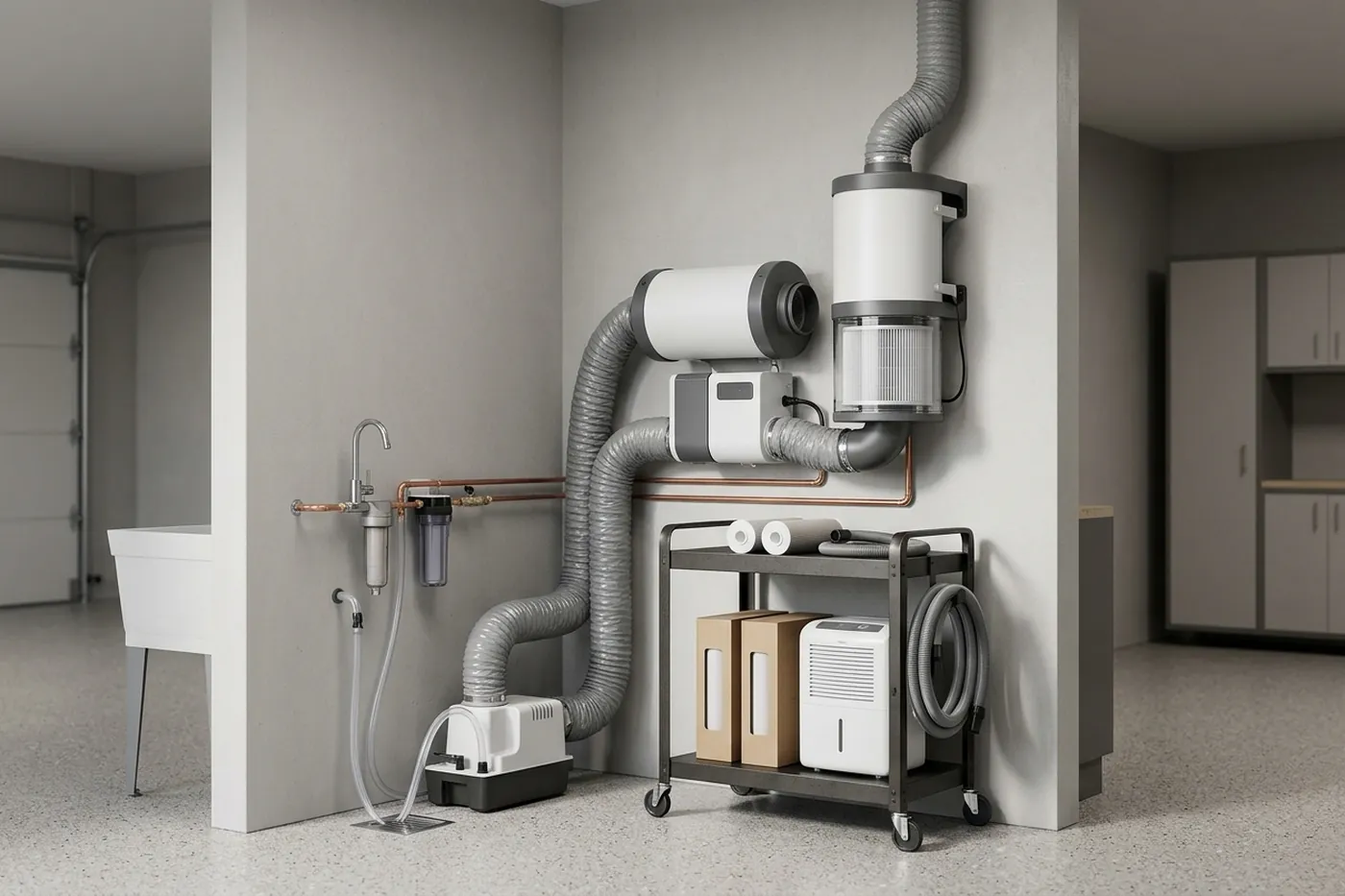
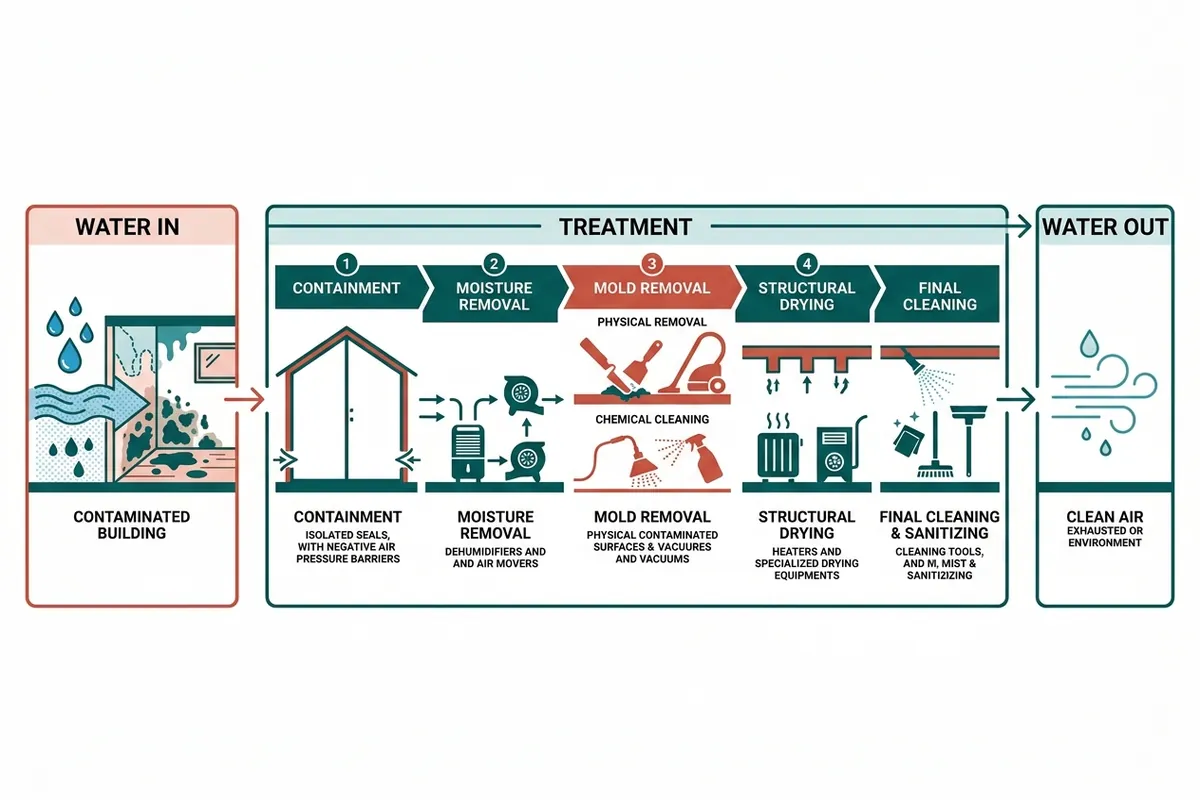
- Inspection — photos, moisture readings, and the extent mapped, including inside cavities where warranted
- Containment — the work area sealed and negatively pressurized so spores don't tour the house
- Removal — contaminated porous materials out; salvageable surfaces cleaned with HEPA filtration running
- Moisture correction — the leak, condensation, or drainage problem that fed the growth, fixed
- Drying and verification — readings brought to targets, documented in writing
- Clearance — post-work photos, and third-party testing when the situation calls for proof
What does mold work cost here?
| Scope | Typical situation | Typical cost |
|---|---|---|
| Inspection | Musty smell, spots, post-leak check | $200–$600 |
| Small-area removal | Contained growth under ~10 sq ft | $500–$1,500 |
| Room-scale remediation | Wall cavities, ceilings, flooring | $1,500–$5,000 |
| Major remediation | Multiple rooms, HVAC involvement | $5,000–$9,000+ |
| Water damage dry-out | Active leaks, storm intrusion | $1,500–$5,000+ |
Ranges narrow to a number after inspection — in writing, itemized, with the photos that justify each line.
Water in the house right now?
The mold clock starts when the water lands — growth can establish on wet materials within 24–72 hours. Stop the source if you safely can, move belongings clear, and call (762) 309-1710. Active-water calls get priority scheduling, and early dry-out is the cheapest mold remediation there is: the kind that never becomes necessary.
The insurance conversation, handled honestly
Whether a claim applies usually turns on cause: sudden events like burst pipes often carry coverage that reaches the resulting mold, while long-term leaks and maintenance issues usually don't — and policies cap mold coverage differently. We can't change your policy, but we document like adjusters read: timestamped photos, moisture readings, a cause narrative, and an itemized scope. Claims succeed or fail on documentation, and ours goes with you either way.
Our services
Every stage of the mold problem, from suspicion to clearance:
Mold RemovalMold RemediationMold InspectionMold TestingBlack Mold RemovalWater Damage Restoration
Where we work
Both sides of the river, gates to county seats:
Mold removal in ColumbusMold removal in Phenix CityMold removal near Fort MooreMold removal in FortsonMold removal in MidlandMold removal in Smiths StationMold removal in CataulaMold removal in HamiltonMold removal in Upatoi
Frequently asked questions
How much does mold removal cost in Columbus?
Small contained areas run $500-$1,500; typical whole-project remediation runs $1,500-$9,000 depending on the area affected, materials involved, and the moisture repair behind it. Inspections run $200-$600. Every number is confirmed by a written scope after a photo-documented inspection. Our Mold removal cost breakdown for Columbus shows what drives each figure, line by line.
Why is mold such a problem in the Columbus area?
Sustained humidity. The metro gets roughly 47-48 inches of rain a year and one of Georgia's longest humid seasons, so indoor spaces that lose the humidity battle — a room the AC can't dry, a wall a leak reached — sit in mold's growth range for months at a time. The climate loads the gun; a moisture problem pulls the trigger.
When does mold need professional remediation?
EPA guidance draws the practical line around 10 square feet of growth: beyond that, professional containment and removal is recommended. Smaller than that, honest answers vary — some homeowners handle a bathroom corner themselves, and we'll say so when that's the case.
Is mold dangerous to my family?
Mold exposure can trigger allergy and asthma symptoms, and some people are more sensitive than others — CDC guidance is that no mold belongs in an occupied home, whatever the species. We don't make medical claims; if anyone in the house has symptoms, that's a conversation for their doctor while we fix the building.
Do I need mold testing, or just removal?
Usually removal. EPA and CDC both note that if you can see or smell mold, sampling is generally unnecessary — the fix is the same regardless of species: remove the growth, fix the moisture. We offer third-party testing for the cases that genuinely need it (clearance verification, landlord disputes, medical documentation), and we'll tell you plainly when you don't.
Will homeowner's insurance cover my mold problem?
Sometimes — it usually turns on the cause. Sudden water events (a burst pipe, an appliance failure) often carry coverage that extends to resulting mold; slow leaks and deferred maintenance usually don't, and mold-specific caps vary by policy. We document everything — photos, readings, timeline — in the format adjusters actually use, and that documentation is often the difference.
How fast can you respond to active water damage?
Active water gets priority scheduling — because the mold clock is real: growth can establish on wet materials in 24-72 hours. The faster a space dries, the smaller the remediation that follows.
Does the mold come back after remediation?
Not if the moisture is fixed — and always if it isn't. That's why every scope we write pairs removal with the moisture correction behind it, and why we put post-work humidity and moisture targets in writing.
Book a Columbus mold inspection
Tell us what you're seeing — spots on a wall, a musty room, a leak that got away — and we'll schedule an inspection with photos and moisture readings. Active water gets priority scheduling.